Benchmark
Ten projects, from a brick wall to Notre-Dame de Paris, measure how well an agent builds LEGO® models with bricky.
The projects
Each project is a prompt, sometimes with inputs: images, a plan of every layer, notes, or a broken script to repair. Seven projects have a reference model that the agent never sees, and a scorer compares the agent's model with it. The other three are open briefs, and a person judges their images by eye.
| # | Project | What the agent gets | Scored |
|---|---|---|---|
| 1 | A brick wall | A precise description | Against a reference |
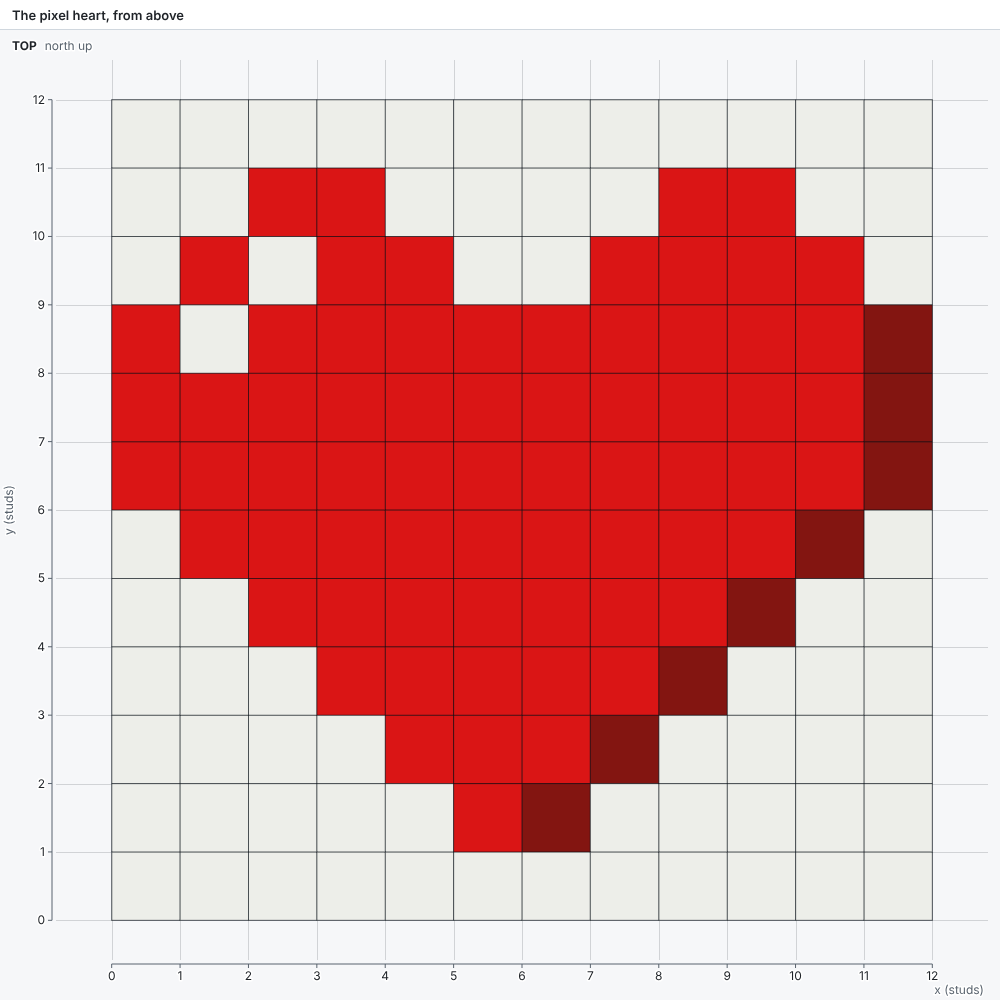
| 2 | A pixel heart | A 12 x 12 pixel plan and an image | Against a reference |
| 3 | Repair a footbridge | A build script with mistakes | Against a reference |
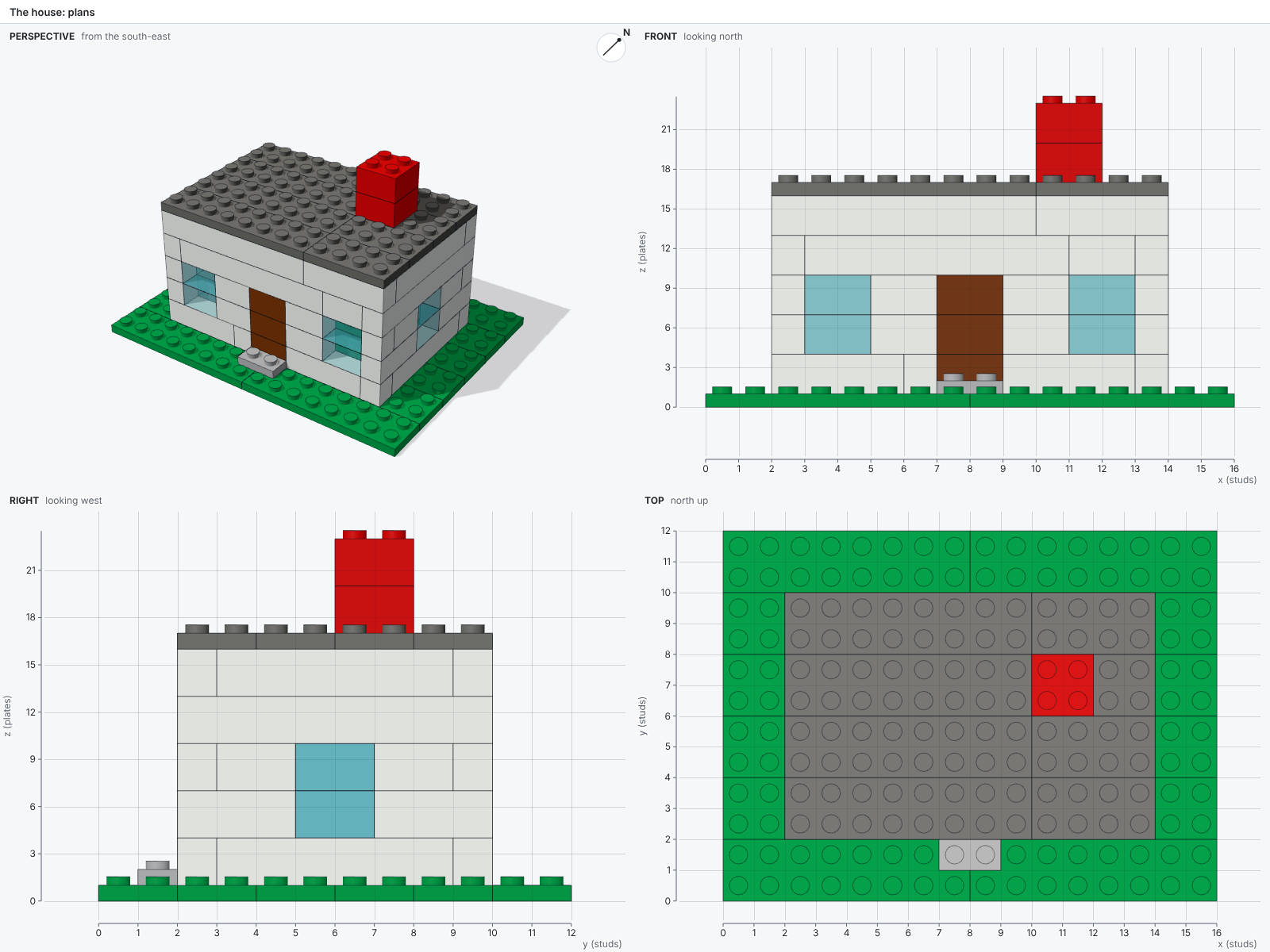
| 4 | A house from its plans | Plans with rulers: six views | Against a reference |
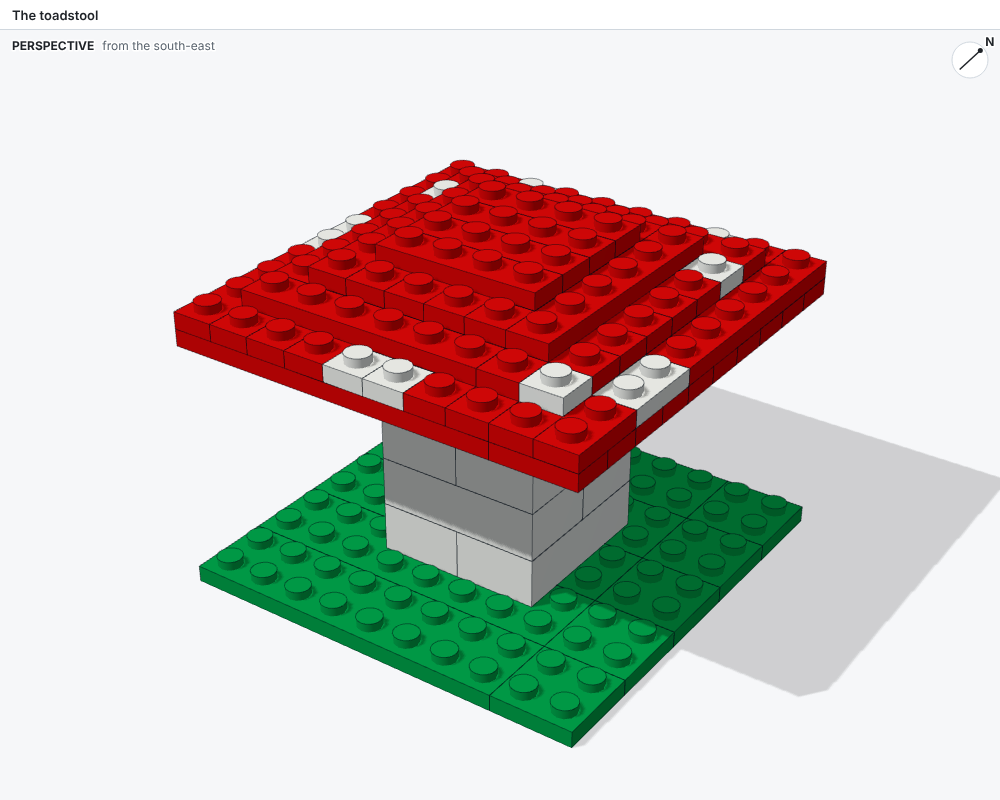
| 5 | A toadstool from its layers | A plan of every layer | Against a reference |
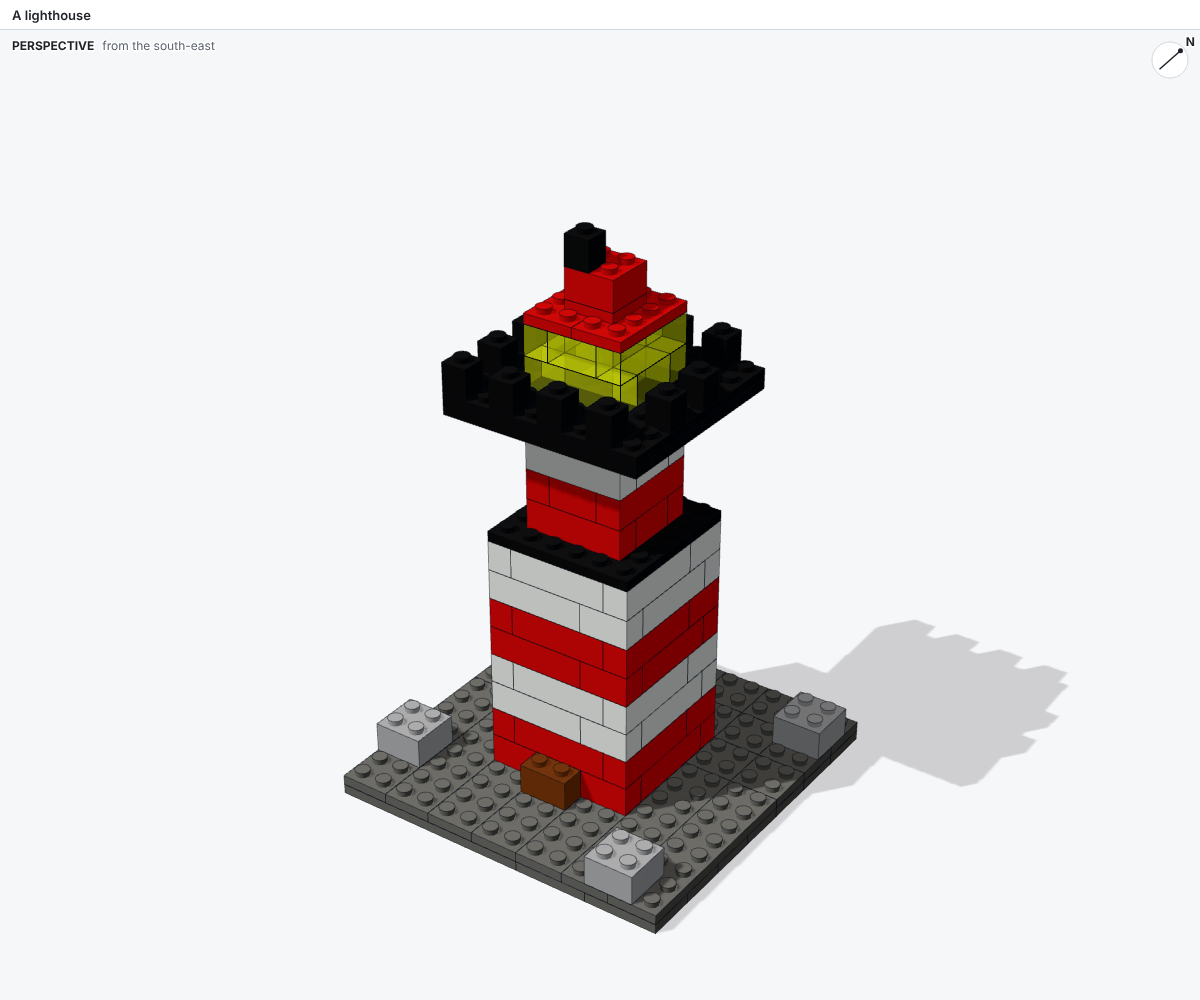
| 6 | A lighthouse from one image | One image, no measurements | Against a reference |
| 7 | A red telephone box | Notes on the K6 kiosk | Judged |
| 8 | A five-story pagoda | Notes on Tō-ji's pagoda | Judged |
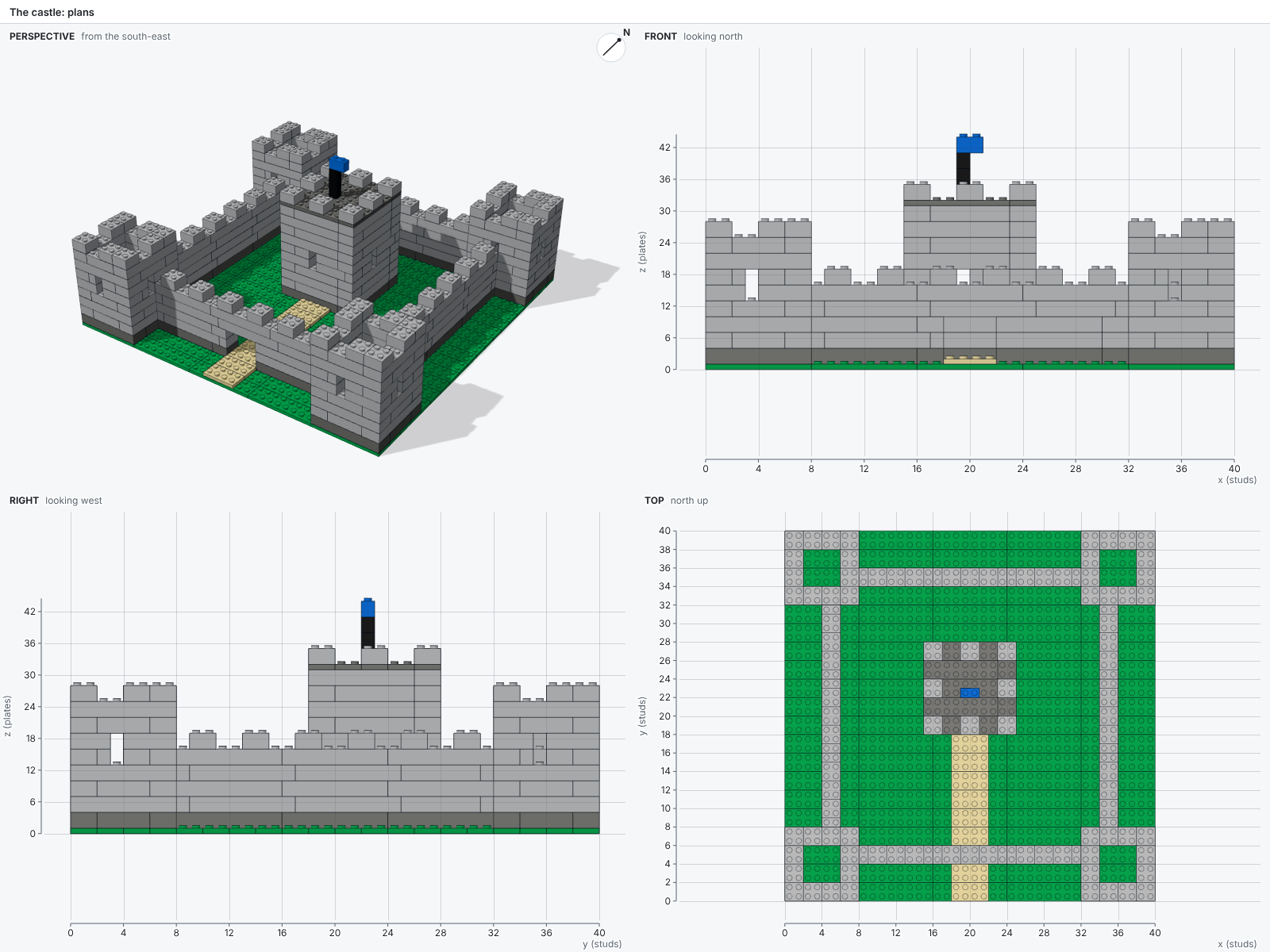
| 9 | A castle from its plans | Plans with rulers: seven views | Against a reference |
| 10 | Notre-Dame de Paris | Notes on the cathedral | Judged |
Inputs
Five projects receive images rendered from their reference. The plans carry rulers in studs and plates; the lighthouse's one image carries no measurements.
Running it
The package bricky-benchmark runs the projects with Claude Code and scores the results.
The package stays off PyPI, because it runs the projects in the repository's benchmark/ folder.
Run it from a clone of the repository, after uv sync:
uv run bricky-benchmark list                      # the projects and their inputs
uv run bricky-benchmark prepare                   # write the inputs generated from references
uv run bricky-benchmark run --project 1           # run one project, then score it
uv run bricky-benchmark run --repeats 3 --jobs 2  # every project three times, two at a time
uv run bricky-benchmark run --model opus          # choose Claude Code's model
Each run needs Claude Code (claude) signed in, and consumes real model usage.
For every run, the runner:
- Builds bricky's wheel and creates a fresh workspace outside the repository: a uv project that installs the wheel. The workspace holds the skill, the examples and the project's inputs, never the reference.
- Starts Claude Code in that workspace in print mode, with the project's prompt, turn budget and time budget.
- Builds the agent's final script in the same workspace and scores it.
Each run writes transcript.jsonl, agent.log, the agent's workspace and record.json to benchmark/runs/<time>/<project>/<repeat>/.
Each invocation also writes summary.json and summary.md to benchmark/runs/<time>/.
Scores
A score has three parts:
- Facts: whether the final script builds, its element count, and its errors and warnings.
- Fidelity, for projects with a reference: the voxels the two models fill, compared over every rotation about the vertical axis and the best shift.
The
shapescore is the share of voxels filled in both models among the voxels filled in either. Thecolorscore counts a shared voxel only when its colors also match. A score of 1 means identical. - Effort: turns, minutes, Claude Code's cost estimate, and the number of builds the agent ran.
Judged projects have facts and effort but no fidelity; a person compares their images with the subject.
Results
On October 28, 2026, a separate Claude agent built each of the ten projects with the version of bricky of that date. Each agent worked in a workspace like the runner's, with the command line and the skill, and the benchmark's scorer scored its final script. With that version, every model built with no errors and no warnings.
| # | Project | Elements | Shape | Color |
|---|---|---|---|---|
| 1 | A brick wall | 27 | 1.00 | 1.00 |
| 2 | A pixel heart | 54 | 1.00 | 1.00 |
| 3 | Repair a footbridge | 28 | 1.00 | 1.00 |
| 4 | A house from its plans | 78 | 1.00 | 1.00 |
| 5 | A toadstool from its layers | 64 | 1.00 | 1.00 |
| 6 | A lighthouse from one image | 88 | 0.93 | 0.91 |
| 7 | A red telephone box | 321 | judged | judged |
| 8 | A five-story pagoda | 596 | judged | judged |
| 9 | A castle from its plans | 401 | 1.00 | 1.00 |
| 10 | Notre-Dame de Paris | 1,872 | judged | judged |
The projects with exact inputs, 1 to 5 and 9, reach a perfect score in one to four builds. Those projects measure whether an agent can use bricky at all. The agents rated the difficulty of the other projects out of 5. The lighthouse, the telephone box and the pagoda got 3, and Notre-Dame got 4. Notre-Dame earns it with roofs meeting at the crossing, rose windows on side studs, and walls packed around openings without floating parts.
Side studs have moved since these runs. They now sit where the real parts have them, half a stud below the top of the brick. The telephone box and Notre-Dame hang parts on side studs, so their results hold for the earlier version only.